A guide to linen bedding
Why Libeco Linen Sheets Feel Different: A Guide to Texture and Care
Linen sheets have a presence all their own: softly textured, naturally breathable, and inclined to fall into an easy, unstudied drape. For anyone accustomed to the smooth finish of cotton, that first encounter can feel like a change of register. Here is how to understand linen’s distinctive character, what to consider when choosing Libeco linen sheets, and how everyday care can help them age beautifully.
Published October 11, 2026
The first impression: texture, not silkiness
Linen is not designed to disappear beneath you. Its surface has a subtle irregularity—a dry, tactile character that can be felt as well as seen. Depending on the yarn, weave, finishing, and amount of washing, linen may feel crisp and lightly textured at first, or already relaxed and yielding. It rarely has the uniformly smooth, almost liquid glide associated with finely finished sateen cotton.
That difference is not a flaw to be softened away. It is part of linen’s appeal. The fabric catches the light unevenly, gathers into generous folds, and brings a lived-in quality to a bed without looking careless. Creases are part of its visual language: not evidence that the sheet has been neglected, but a natural consequence of a fabric that moves and settles rather than holding a pressed, polished line.
With Libeco linen sheets, as with linen from any maker, the specific hand depends on the construction and finish of the particular product. “Linen” identifies the fiber, not one single texture. A useful approach is to consider the description, weight, weave, and care guidance for the exact sheet you are choosing, then allow for the way linen changes through use. New linen and well-washed linen may feel noticeably different.
For sleepers who enjoy a soft, sleek surface, linen can take a little adjustment. For those drawn to natural texture and an unfussy finish, its character may feel instantly right. The pleasure is less about the sensation of perfection and more about comfort that looks and feels relaxed.
Why linen feels breathable
Linen is made from flax fibers, which are arranged and woven into a fabric with a distinctive structure. How airy a finished sheet feels depends on more than fiber alone: yarn thickness, weave density, finishing, and the surrounding bedding all play a part. Still, linen is often chosen for its breathable, open-feeling character and its suitability for people who prefer a less enclosed sleep surface.
Rather than promising a particular temperature or an identical experience for every sleeper, it is more useful to think of linen as a fabric that can feel comfortable across changing conditions. Its tactile surface and relaxed drape create a different relationship to the body than a smooth, closely finished cotton sheet. Some people appreciate that dry, airy impression in warmer weather; others enjoy linen throughout the year, layered with blankets as temperatures shift.
Sleep comfort is personal and shaped by the room, mattress, duvet, clothing, and individual preferences as much as by the sheet. If you tend to feel warm at night, look at the entire bedding arrangement: a lighter duvet, breathable sleepwear, and a well-ventilated room may matter alongside the choice of linen. If you prefer a warmer, more enveloping bed, linen can still serve as a foundation beneath additional layers.
There is no universal rule that linen is always cooler than cotton. Cotton itself varies considerably: percale, for instance, generally feels crisp and matte, while sateen tends toward a smoother, more lustrous hand. The best comparison is not a simple ranking but a question of sensation—whether you want crispness, smoothness, texture, or a blend of these qualities.
The drape that makes a bed feel relaxed
One of linen’s most recognizable qualities is the way it falls. Its folds are soft but not perfectly uniform, and a made bed tends to have movement rather than a tightly pressed finish. That relaxed drape can make a room feel quieter and more personal: elegant, certainly, but not overly formal.
Styling linen is often a matter of resisting the urge to overwork it. Smooth the sheet enough to make the bed inviting, then let the fabric settle. A folded top edge, a casually turned-back duvet, and a few restrained layers can give the texture room to speak. Because linen has visual dimension of its own, elaborate patterns or too many competing textures are not always necessary.
Color can emphasize that effect. Soft neutrals reveal the fabric’s subtle variations, while deeper shades bring more definition to folds and seams. Whatever the palette, expect the surface to look less like a pressed hotel sheet and more like a natural textile with an easy rhythm. A little creasing is simply part of the composition.
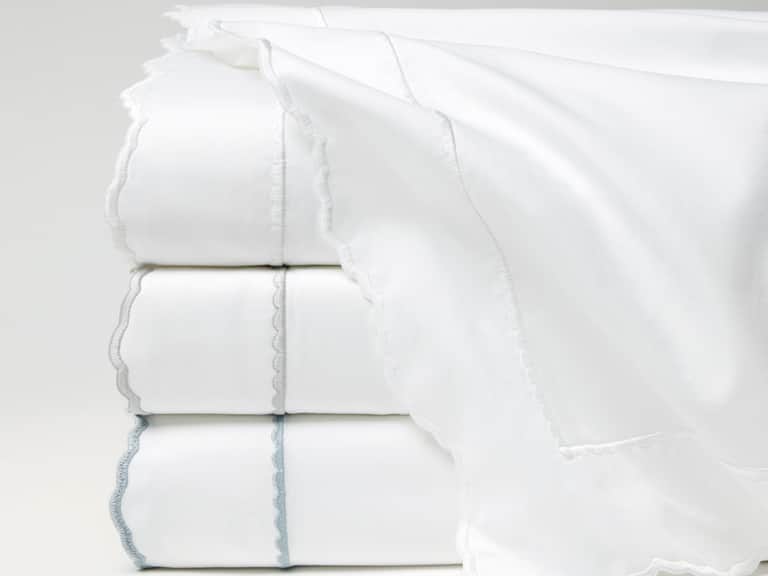
For a crisp cotton counterpoint, the Pettine Flat Sheet pairs percale made from extra-long-staple cotton with embroidered scalloped edges. Its cool, crisp hand offers a different kind of refinement from linen’s softly rumpled texture. Comparing the two makes clear how weave and fiber influence the mood of a bed: percale reads tailored and neat; linen tends toward tactile and relaxed.
What to consider when choosing Libeco linen sheets
A beautiful sheet begins with the questions that matter in daily life. Before choosing, consider how you like fabric to feel against your skin, how warm or cool your bedroom tends to be, and how much time you want to spend on laundering and finishing. Linen has a distinctive hand and a naturally relaxed appearance, so it is worth choosing for those qualities rather than expecting it to behave exactly like cotton.
- Look beyond the fiber name. Check the details for the specific Libeco sheet, including its construction, weight, finish, and care instructions. These can affect the initial feel and how the fabric performs over time.
- Think about your preferred surface. If you love a sleek, smooth sheet, compare linen with sateen or other cotton options before deciding. If you like texture and a softer, more natural-looking finish, linen may be a stronger fit.
- Check dimensions carefully. Confirm the mattress size and depth, as well as the dimensions of the sheet. A generous drape can be appealing, but the right fit still matters for easy bed-making and comfortable use.
- Consider how you make the bed. Linen’s creases are expected. If a very smooth, sharply pressed finish is essential to your routine, account for the additional ironing that may require.
- Review the care label before washing. Instructions vary by product. Follow the manufacturer’s guidance rather than assuming all linen should be treated identically.
- Choose for the whole bedding system. Sheets work alongside pillowcases, duvet covers, blankets, and mattress protectors. Consider how the textures and weights will feel layered together.
Thread count is not a reliable shortcut for judging linen in the same way shoppers sometimes use it when comparing cotton. Fiber, yarn, weave, finishing, and workmanship all contribute to the final hand. A compelling linen sheet is not necessarily the one with the biggest number on a label; it is the one whose feel, construction, and care requirements suit the way you sleep.
How linen changes with use
New linen can feel firmer or more pronounced in texture than linen that has been washed and used repeatedly. With ordinary laundering, the fabric often becomes more relaxed and supple. That evolution is one reason linen bedding can feel personal over time: it does not always arrive at its most familiar state on the first night.
The change is gradual, and it should not be confused with a promise that every sheet will soften in precisely the same way. Results depend on the linen itself and on how it is washed, dried, and handled. Harsh detergents, high heat, overloading the machine, or rough treatment may strain fibers and shorten the life of a textile. Thoughtful, consistent care is a better route to softness than trying to accelerate the process.
Linen’s lived-in look also means that wrinkles need not be treated as a problem. If you prefer a neater finish, remove the sheets promptly from the dryer if the care instructions allow machine drying, and smooth them while folding or making the bed. A warm iron or steamer may suit some linens, but check the label first. Many people choose to leave the natural texture intact.
Everyday care: clean, gentle, consistent
Good sheet care is less about elaborate rituals than about respecting the fabric. Begin with the instructions supplied for the exact product. Linen blends, finishes, colors, and construction can require different treatment, so a general guide should never take precedence over the manufacturer’s label.
As a sensible starting point, wash sheets with similar colors and avoid packing the machine too tightly. Room to move helps water and detergent circulate through the load and reduces unnecessary friction. Use a suitable detergent in an amount appropriate to the load; more soap does not necessarily mean cleaner sheets, and residue can affect how fabric feels.
Temperature and cycle are especially important. Follow the specified settings, and use a gentler cycle when directed. Chlorine bleach and strong stain treatments can be damaging or affect color, so do not use them unless the product’s care instructions explicitly allow it. If a stain needs attention, treat it promptly and gently, testing any product in an inconspicuous area when appropriate.
Drying deserves equal consideration. High heat can be hard on natural fibers, while removing linens before they are completely over-dried may help limit excessive creasing and stress. Air-drying is an option when the label permits and conditions allow. If using a dryer, choose the recommended setting and avoid leaving the sheets to tumble longer than necessary.
Once dry, fold the sheets or return them to the bed. Store clean linen in a dry, well-ventilated place, away from prolonged dampness and direct exposure to strong sunlight. Rotating between sets gives each one time to rest between uses and can make regular laundering easier to manage.
A simple care routine
- Read the product label. Confirm the recommended wash temperature, cycle, drying method, and ironing guidance.
- Sort thoughtfully. Wash colors with similar colors, and keep rough or heavy items from rubbing against delicate bedding.
- Use a moderate load. Leave room for the sheets to move rather than crowding the drum.
- Choose appropriate detergent. Measure according to the product directions and the size of the load.
- Dry with care. Use only the setting permitted by the label, and avoid unnecessary high heat or prolonged tumbling.
- Embrace the finish you prefer. Leave the natural creases in place, or smooth and press the sheets if the care instructions allow.
For a fresh bed, regular washing is important, but frequency depends on personal preference, climate, and use. Pillowcases may need laundering more often than the flat sheet, while a duvet cover follows its own schedule. The goal is a clean sleep surface without subjecting the fibers to more aggressive care than necessary.
Linen or cotton? A question of feeling
The choice between linen and cotton is not a contest with one winner. It is a decision about the atmosphere you want the bed to create. Linen brings a dry, textured hand, gentle irregularity, and an easy drape. Cotton percale is often chosen for its crisp, matte feel; cotton sateen for a smoother surface and a subtle sheen. Each fabric can be beautifully made, and each responds differently to washing and styling.
Think about what you notice when you climb into bed. Do you prefer a cool, crisp first touch, or a softly textured surface that feels more relaxed? Do you want the bed to look pressed and precise, or gently rumpled? These preferences are more useful than abstract claims about luxury or performance. The best bedding is the bedding you enjoy using night after night.
It can also be helpful to build a mixed-fabric bed. Linen sheets may sit comfortably alongside cotton pillowcases, a textured sham, or a lightweight coverlet, provided the colors and weights work together. A contrast in surface can make the bed feel considered without turning it into a display. Keep the practical details in view: items with different care requirements may need to be laundered separately.
Common questions about linen sheets
Do linen sheets feel rough?
They can feel more textured than smooth cotton, particularly when new, but “rough” is not a universal description. The hand varies by yarn, weave, finishing, and use. If you are sensitive to surface texture, review the product information and consider trying linen in person when possible.
Will linen sheets become softer?
Linen commonly relaxes with use and washing, but the pace and degree vary. Gentle care according to the product instructions helps preserve the fabric as it changes. Avoid harsh treatment intended to force softness.
Do linen sheets need ironing?
No. Their natural creases are part of their familiar appearance. If you prefer a smoother finish, check the care label for ironing or steaming guidance and use the recommended setting.
Are linen sheets only for warm weather?
Not necessarily. Bedding comfort depends on the room, the sleeper, and the layers used. Linen can be paired with blankets and duvets for different seasons, though individual preferences vary.
What makes Libeco linen sheets different?
The answer depends on the details of the particular Libeco product—its construction, weight, finish, and specifications. Check the product listing and care label rather than assuming every linen sheet has the same hand or requirements.
The quiet luxury of a fabric allowed to be itself
Linen’s appeal lies in its refusal to look overly perfected. Texture catches the light; creases soften the outline of the bed; the fabric settles into a drape that feels considered without appearing arranged to within an inch of its life. Those qualities make linen sheets an inviting choice for anyone who values natural texture and ease.
Choosing Libeco linen sheets is ultimately about deciding whether that particular character suits your idea of comfort. Pay attention to the product’s construction and fit, consider how the fabric feels against your skin, and follow its care instructions with consistency. Over time, linen can become a familiar part of the room: breathable in spirit, tactile by nature, and quietly elegant in the way it makes an everyday bed feel more personal.